Tail Light Not Working? Causes and How to Fix It
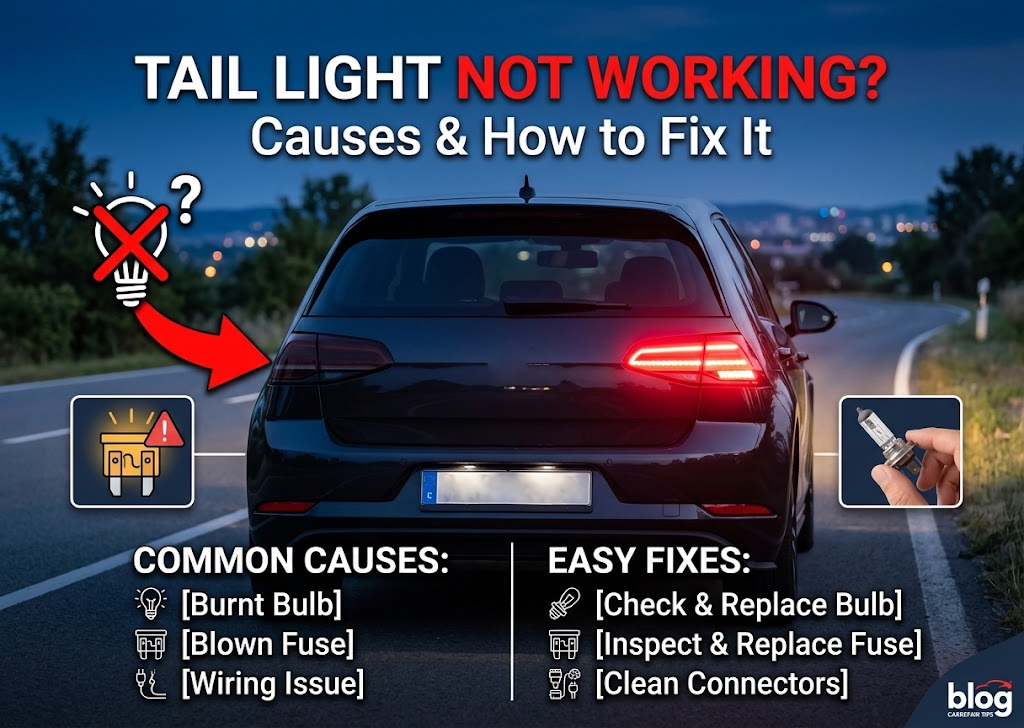
Short answer: the most common reason a tail light stops working is a blown bulb. If a new bulb doesn't fix it, the next things to check are the bulb holder, the fuse, the wiring and connector, and any moisture inside the unit. On LED tail lights, the cause can be a failed LED or module, which often means replacing the unit.Most of these checks take a few minutes and need no special tools. Work through them in order and you’ll usually find the fault before you spend anything on a new unit.
Table of Contents
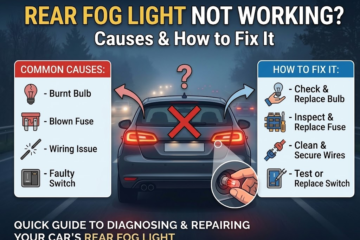
Quick symptom guide
| What you see | Likely cause | What to try first |
|---|---|---|
| One tail light is out | Blown bulb, or a bad bulb holder | Swap the bulb and inspect the holder |
| Both tail lights are out | A blown fuse or a shared wiring fault | Check the fuse for the rear lights |
| The tail light is out but the brake light still works | The tail filament in a two-filament bulb has blown, or the holder contacts are corroded | Replace the bulb and clean the contacts |
| The light flickers | A loose bulb, corroded holder or loose connector | Reseat the bulb and check the connector |
| The light is dim | Corroded contacts or a poor earth connection | Clean the holder and the earth point |
| Water or fog inside the unit | A failed seal or a cracked lens | Dry it out and find the leak, or replace the unit |
| Some LEDs are dark | Failed LEDs or a faulty module | Usually a matching unit replacement |
Step 1: Check which lights are affected
Switch your lights on and walk around the car. Note whether it’s just one tail light, both, or the brake light and indicator too. Ask someone to press the brake pedal while you look, or reverse up to a shop window and watch the reflection. This tells you whether the problem is one bulb or something shared, like a fuse.
Step 2: Check the bulb
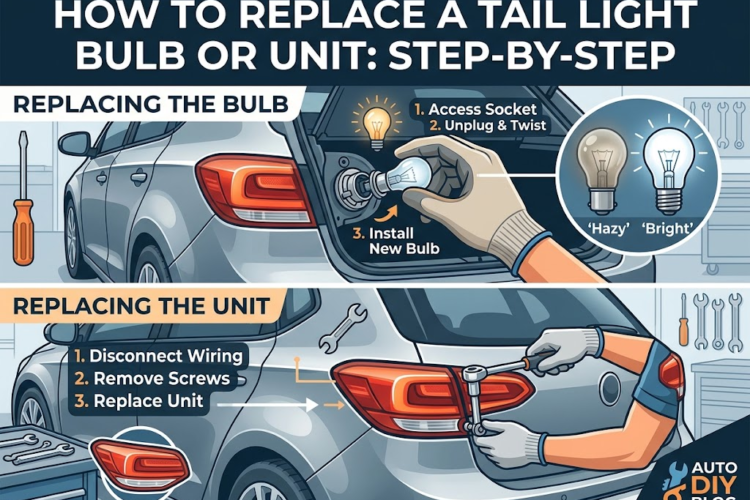
A blown bulb is the most common cause and the cheapest fix. Remove the bulb and look at the filament. If it’s broken, or the glass is dark, replace it. Make sure the new bulb matches the old one. Our guide on how to replace a tail light shows how to remove and refit it.
Step 3: Check the bulb holder
If a new bulb doesn’t light up, look at the holder. Green or white corrosion, burnt plastic and bent contacts can all stop the light working. Clean the contacts gently with a small brush or contact cleaner. If the holder is melted or badly damaged, replace it, or replace the unit if the holder isn’t sold separately.
Step 4: Check the fuse
If both tail lights are out, check the fuse. Your owner’s manual shows which fuse covers the rear lights and where the fuse box is. Replace a blown fuse with one of the same rating. If it blows again straight away, there is likely a short circuit in the wiring, and that’s a job for a garage.
Step 5: Check the wiring and connector
Look at the plug that connects the light unit to the car. It should be firmly seated with no green corrosion or melted plastic. Wires that run to a boot lid or tailgate flex every time it opens, so they can wear or break over time. If a light works when you wiggle the wiring, that’s a strong clue.
Step 6: Check the earth connection
A poor earth can cause dim, flickering or odd lights. The earth is a wire that connects the light circuit to the car’s body. If it’s loose or corroded, cleaning and tightening it can fix the problem.
Step 7: Look for moisture inside the unit
Water inside a tail light can corrode the holder and contacts, and can cause faults on its own. Small amounts of condensation can clear, but a unit that keeps filling with water has a failed seal or a crack. On a cracked lens or damaged housing, replacement is usually the sensible fix.
When to replace the whole tail light
Replace the unit when:
- The lens is cracked or the housing is damaged
- The unit keeps filling with water
- The bulb holder is burnt and can’t be replaced separately
- LED segments or the LED module have failed
A matching used unit is often the more affordable route. Browse used tail lights on Autolight, and check the fit first using our guide to checking compatibility. It was written for headlights, but the same steps apply to tail lights. If you’d rather have a professional look at it, you can find a repair shop.
Is it OK to drive with a tail light out?
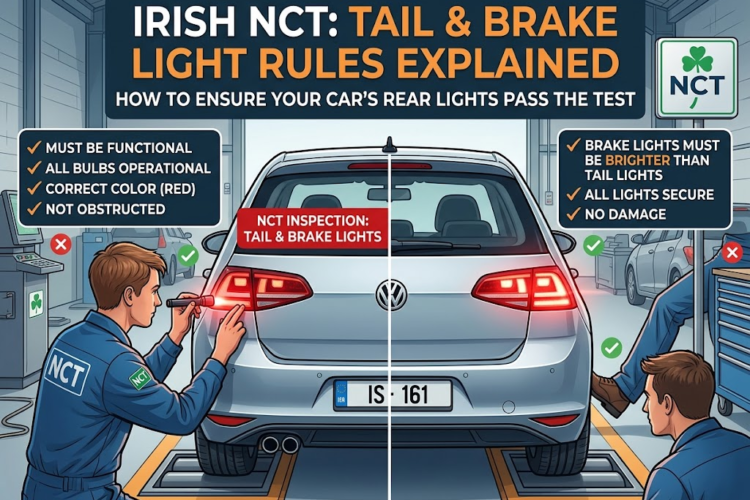
It’s best to fix it as soon as you can. A rear light that isn’t working makes your car harder to see from behind, especially at night and in poor weather. It can also cause an NCT failure, which we cover in tail light and brake light NCT rules in Ireland.
Tail light not working FAQs
Why is only one of my tail lights not working?
Usually a blown bulb or a bad bulb holder on that side. If a new bulb doesn’t work, check the holder contacts and the connector.
Why are both my tail lights out?
Check the fuse first, since both lights often share one. If the fuse is fine, the cause may be a shared wiring fault or the light switch.
Why does my brake light work but not my tail light?
If your car uses a two-filament bulb, the tail filament may have blown while the brake filament still works. Replace the bulb and clean the holder contacts.
Can I fix a tail light with water inside?
Sometimes. If the seal has failed, it may be resealed by a specialist. If the lens or housing is cracked, replacing the unit is usually better.
How much does it cost to fix a tail light?
It depends on the cause. A bulb is usually the cheapest fix, while a damaged LED unit costs more. A matching used unit from a breaker is often more affordable than a new one.
Need a replacement tail light?
Browse used car tail lights in Ireland and filter by make, model, year, side and county.