How to Check Headlight Compatibility Before You Buy a Used One
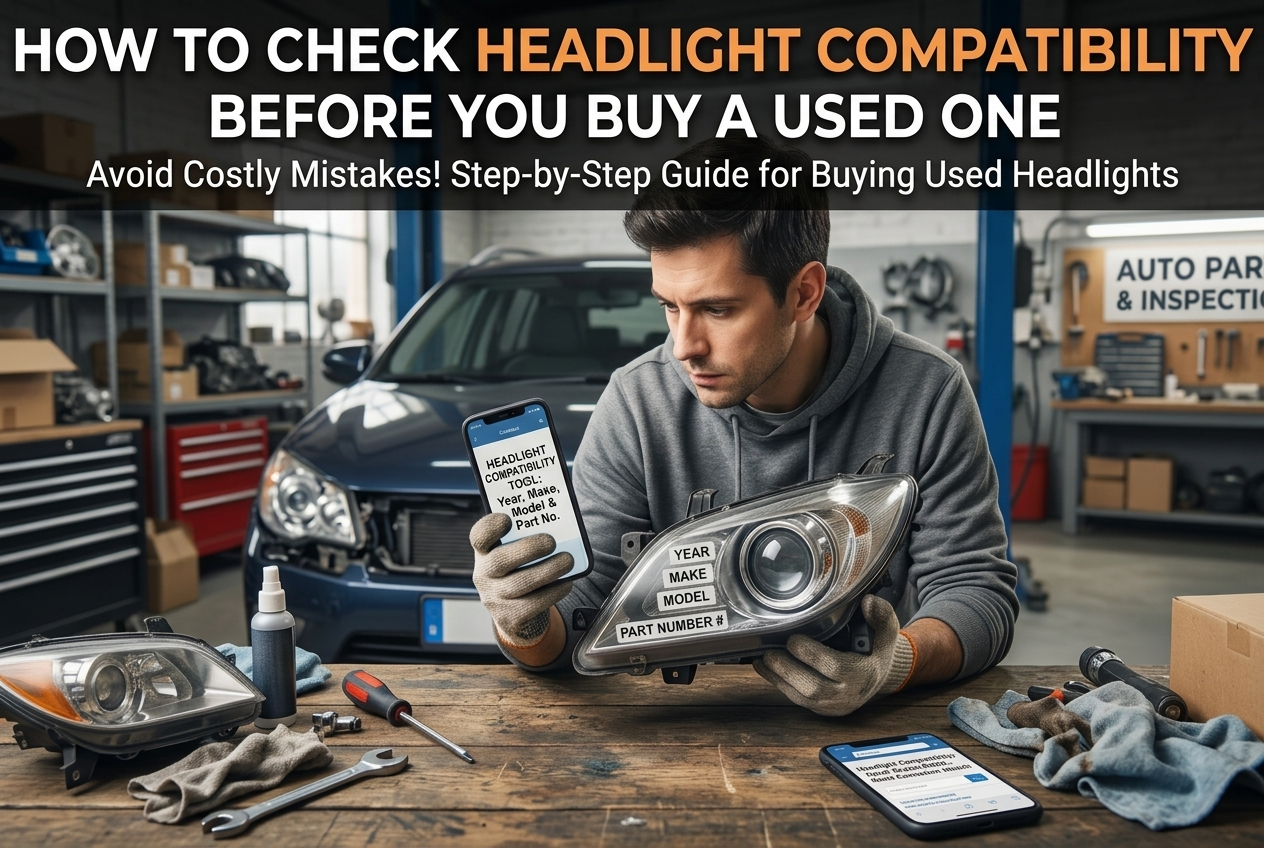
Short answer: to check headlight compatibility, match six things: your car’s make, model and year range; the side (left or right); the lighting technology (halogen, xenon or LED); the trim and extras; the part number; and the beam pattern for driving on the left. If all six line up, a used headlight should fit and work the way it should.
That sounds like a lot, but it takes about ten minutes and it’s far cheaper than buying the wrong unit. Here’s how to go through it, one step at a time.
Table of Contents
Why two headlights that look the same can be different
Car makers change headlights more often than most people expect. A facelift, a different trim level or a different lighting system can change the shape of the unit, the plug, the mounting points or the electronics inside. Two headlights from the same model can look almost identical from the front and still not be interchangeable.
The good news is that the differences are easy to spot once you know where to look.
Step 1: Start with your make, model and year range
Write down your car’s make, model and exact year of production. Your registration or the owner’s manual will confirm it. The year matters more than you’d think, because a mid-life update often brings a redesigned headlight.
When you browse used headlights on Autolight, use the make, model and year filters first. Then read the listing to see which years the seller says the unit fits. If the listing only gives a model name and no years, ask before you buy.
Step 2: Choose the correct side
Left and right headlights are not interchangeable. In Ireland, the right-hand headlight is the driver’s side and the left-hand one is the passenger’s side. If a listing says “driver’s side” or “right”, it’s the one nearest the driver’s seat.
Step 3: Match the lighting technology
Stick with whatever your car was built with: halogen, xenon (HID) or LED. Each type uses different bulbs, wiring and electronics, so swapping between them usually means extra parts, and it isn’t always allowed. The Road Safety Authority (RSA) notes that retrofitted HID and LED headlamp bulbs, meaning ones not fitted by the manufacturer, are not always compatible with the vehicle or the headlight.
Not sure what your car has? Our guide to halogen vs LED vs xenon headlights explains how to tell them apart.
Step 4: Check the trim and extras
Two headlights for the same model and year can still differ in what’s built in. Look for these details in the listing or ask the seller:
- Cornering or adaptive lighting
- A levelling motor or sensor connection
- Built-in fog lights or daytime running lights
- Bulb indicators or LED indicators
- Bulb holders, ballast, ignitor or control module included
Xenon and LED units often rely on a separate ballast or control module. If it isn’t included, you may have to source it separately.
Step 5: Compare the part number
Many headlights have a part number on a label or moulded into the back of the housing. Ask the seller for a clear photo of it and compare it with the number on your original unit. If you don’t have the old headlight any more, a parts department at a main dealer can usually confirm the correct number from your registration or VIN.
A matching part number is the closest thing to a guarantee that the headlight will fit.
Step 6: Check the beam pattern for driving on the left
This one catches out a lot of buyers, especially with parts that come from continental Europe. The RSA points out that headlamps on left-hand drive vehicles dip to the right and may dazzle oncoming drivers here. Some designs let you adjust the bulb without a conversion, but otherwise the headlamps need to be replaced to pass the headlamp aim part of the roadworthiness test. You can read the details in the RSA’s guide to left-hand drive vehicles.
In practice, look for units from right-hand-drive (Irish or UK spec) cars, or ask the seller whether the beam pattern is set for driving on the left.
Quick checklist before you buy
- Make, model and year range match your car
- The side is correct (right is the driver’s side)
- Same lighting technology as your original
- Trim, levelling, cornering and indicator details match
- Part number matches, or the seller has confirmed the fit
- Beam pattern is right for driving on the left
- Photos show the front, back and connector, with no cracks, moisture or broken tabs
After fitting: get the aim checked
Even a perfect match can sit slightly differently once it’s fitted, and headlamp aim is one of the most common reasons cars fail the NCT. It’s worth having the beam checked at a garage after fitting. We explain why in our guide to NCT headlight requirements in Ireland.
Headlight compatibility FAQs
Can I use a headlight from a different year of the same model?
Sometimes, but not always. If the model had a facelift, the headlight may have a different shape, plug or electronics. Check the part number or ask the seller to confirm the year range.
Are left and right headlights the same?
No. They are mirror images, so you need the correct side. In Ireland the right-hand one is the driver’s side.
Can I fit a headlight from a car with a different trim level?
It depends on the details. A unit from a higher trim may include LED lighting, cornering lights or a levelling motor that your car isn’t wired for. Match the technology and the extras, not just the model name.
Do I need to get the headlights aimed after fitting a used one?
It’s a good idea. A properly aimed headlight lights up the road without dazzling oncoming drivers, and aim is something the NCT checks.
Ready to find your headlight?
Browse used car headlights in Ireland, or check our FAQ page if you’d like to know how Autolight works.